
The view of bureaucracies is that they are comprised of interchangeable parts—one person leaves, another can be easily slotted in to do the same work. Such perspectives contribute to the dulling of the work, the averaging of output, and the deskilling of the whole.
Individuals—and not just politicians—do matter. It’s not simply the skills they bring to bear—the current lens through which individuality is viewed within the Australian Public Service (APS). It is the choices they make. That’s quite evident in the Report of the Royal Commission into the Robodebt Scheme.
A recurring theme in the Report is that of character, defined in the Oxford English Dictionary as the distinctive mental and moral qualities of an individual. Many of the institutional failings identified by the Royal Commission are not simply of process but of character. Time and again, those in power—and with the power over people’s lives—were found wanting. They lacked judgment, were incurious, bullied and harassed, delayed and deflected, misled, shaped advice for expedience and agreeableness, and opted for acquiescence.
We expect officials—both elected and non-elected—to exercise fairness, intelligence, due process, courage, and respect both for all citizens and for the use of hard-earned taxpayer funds.
Character can be difficult to capture; we know it when we see it and we know when it is lacking. In other words, it’s judgmental and personal. That makes it a difficult issue in Canberra, a company town with only one or two degrees of separation and high levels of internal dependency for success and promotion.
But it must be tackled. As argued by Steven Levitsky and Daniel Ziblatt in How Democracies Die, democracies are much more than a set of rules. They include unwritten norms and community expectations. Adherence to those norms depend heavily on the good character of the politicians and of the people in power.
None of the reform efforts underway addresses the issue of character. Yet it is core to the institution of the public service, no less than it is to the political process. Reducing discussion of character to the APS Code of Conduct—more rules—sanitises it. APS reforms aren’t addressing the culpability of the ministers and their influence, inseparable from the bureaucracy. And to be successful, they’ll need to tackle deeper impediments to change, including attitudes towards the public, contestability, and convenience.
The Report echoes the observation of Donald Horne in The Lucky Country: ‘There is a lot of make-believe in Canberra and a tendency to look down on the rest of Australia as crude, self-interested, troublesome and ignorant. Only officials are believed to be well informed and capable of expert decision; the rest of Australia is a distant interruption.’
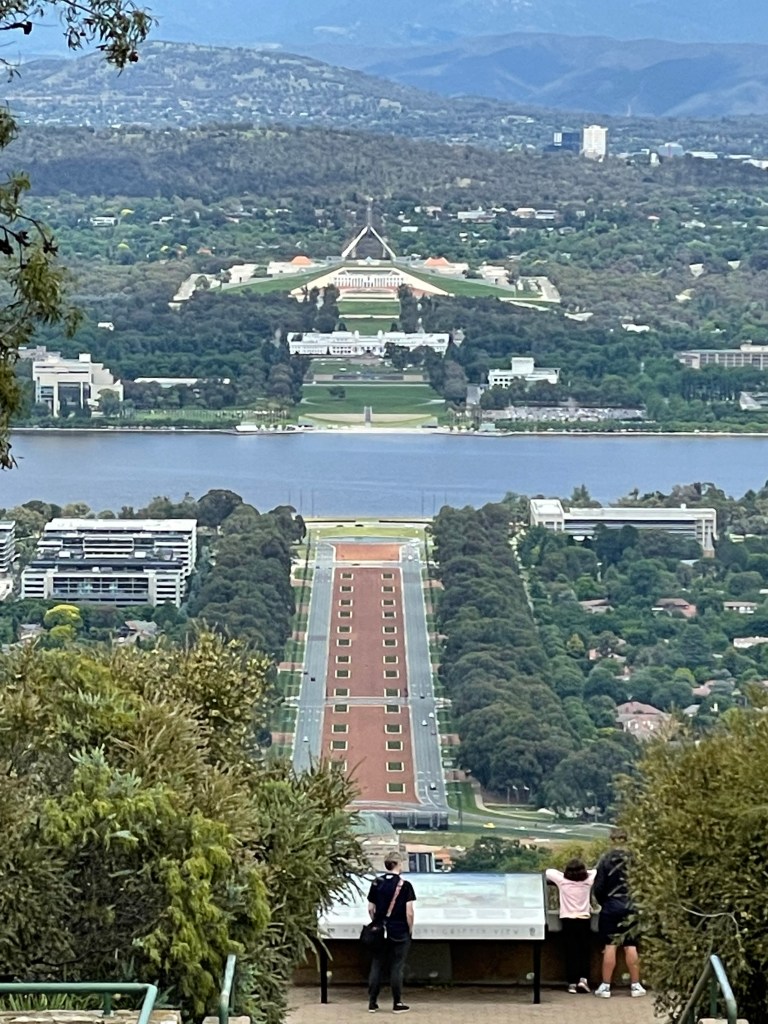
In a classic manifestation of Churchill’s adage of how buildings shape attitudes, Parliament House, opened in 1988, exacerbates that make believe. Its bunker-like corridors reinforce the inward focus of the Canberra echo-chamber. Public servants must make their way ‘up the Hill’ like penitents to wait their turn in the small antechambers of ministerial offices, after lobbyists, vendors, and other courtiers. The media, housed in the same building, have long been captured by political machinations.
The patent lack of generosity of spirit to those less fortunate, evident in the Report, whether those on welfare, in need of assistance, fleeing persecution or, increasingly, simply seen as a lesser class is seen an election winner, and applies to both sides of politics, diminishing Australian society as a whole.
It’s often argued—with cause, under the best of circumstances—that high walls and secrecy enable public servants to deliver frank and fearless advice. The evidence, however, is mounting, including from Robodebt, the charges of war crimes in Afghanistan, and the Medical Research Future Fund, that it can prevent inconvenient truths to be aired, limit input, permit favouritism, and effectively shut down debate.
Such unwillingness to confront bad news and contest ideas, whether popular or otherwise makes Australia weaker. It leaves us more prone to adopt less robust, and more inept and damaging policies. It makes us more vulnerable to misinformation when we have not the information, data, ability, and fora allowing us to test ideas, models, assumptions, and outcomes.
Government would be better addressing these systemic flaws and strengthening its own capability—curiosity, intellectual engagement, moral strength—than seeking to shutter speech through its proposed misinformation bill, for example.
Government also needs to overcome the growing preference for convenience as a shaper of policy. Sometimes, that is masked as a ‘need for speed’—the ‘just get it done’ attitude driving Robodebt. At other times, it is portrayed as modern digital delivery—shaped by the existing tech stacks of the mega-agencies. Often, convenience for law enforcement and national security trumps concerns for human rights, privacy, and welfare.
Checks and balances are needed to prevent government from veering into coercive behaviours simply because it can, and to hold decision-makers to account. Too often, such constraints are portrayed by those in power as ‘red tape’ or simply, disparagingly, as bureaucracy.
True, over-regulation and bureaucratic risk aversion are problems. But for democratic rightness, fairness and accountability, there are some matters, especially in public policy, that should be hard for government, not easy; slow, not speedy; and open, not obscured.
The APS clearly needs to do better. Change will be hard. But it is not impossible. It is like character itself, as Heraclitus says, a matter of choice.
Defaulting to the low bar of laws, rules and codes infers a weakness of character inside the institution. Anyone who has had the privilege of working in a high-performing team inherently craves it again—that won’t be found in APS codes and rules, but in the people it attracts and nurtures.
More likely, the APS may need to consider the advice of one of my wise professors, Ron Weber, from a class in strategy years ago. There are some organisations that are broken beyond repair, he said. It is best, and kindest, to close them and start afresh. And in this case, change must start at the top.
Last, we need to break open the unhealthy, often toxic echo chambers that have been allowed to perpetuate in Canberra. Requiring ministers to relocate into departments when Parliament is not sitting would help break the inward focus of Parliament House.
And we should question the assumption that all government work and decisions must be made in Canberra, Horne’s ‘administrative garrison…isolated from the Australian people’.
Our experience during the COVID-19 pandemic has shown we can distribute work and decision-making geographically. The APVMA is a salient lesson on how not to do this, rather than not to do it at all. Instead of reverting to the habits of 2019, the APS should be redesigning work practices, organisation, and culture, to access the diverse perspectives and skills across the nation.
The existence of the sealed chapter of the Robodebt Report suggests some hard decisions will need to be made. The danger is that public service reaction will be restricted to the sealed chapter. That won’t resolve the broader issue of character or attitudes needed to address the problems that led to Robodebt and that weakened a fundamental institution of democracy.
 Lesley Seebeck